
|
|
|
(These entries are part of hiptop Nation, a communal weblog for anyone in the world using a Hiptop device) |
| posted by kalephunk at developer ° danger ° com more from this user ° all posts « OLDEST « PREVIOUS | NEXT » NEWEST » |
| grinding a litho stone Sun 04.04.04 11:56am PDT #8693 |
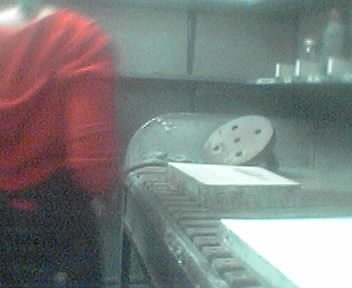 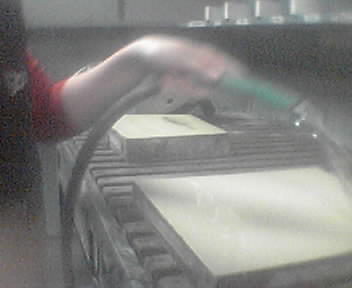 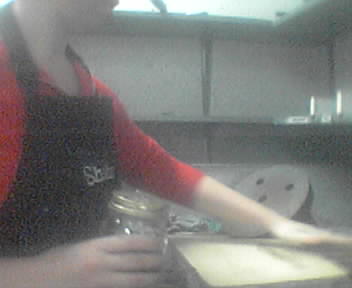 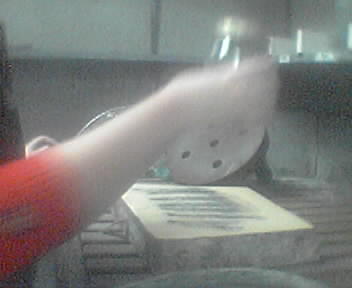     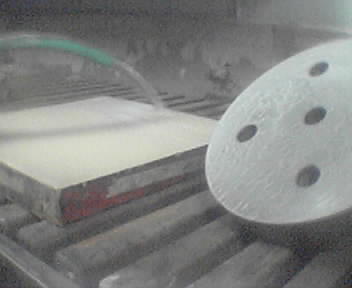 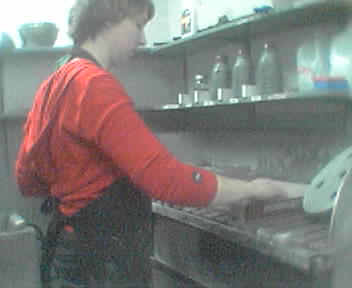 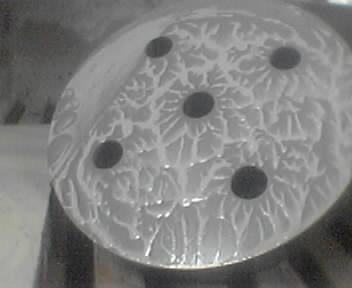  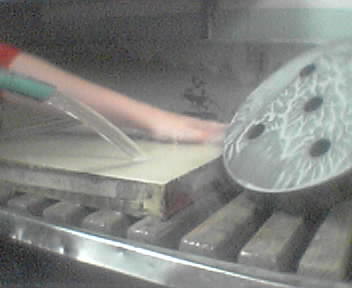 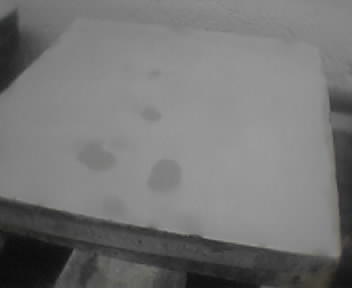 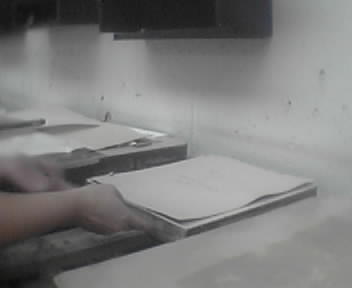 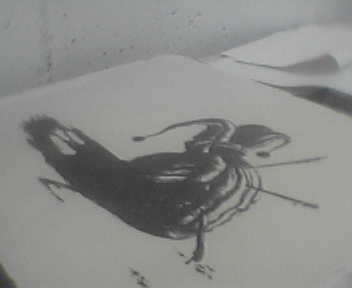 It's a long and tedious procedure, but absolutely necessary if you want to print with the quality of a fine stone. First, it's essential that the stone is washed; then carborundum is sprinkled across the surface -- usually you start with 50 grain, then move on in steps to 100, then 180, then 220 as you get finer. After the carborundum is in place, the grinding begins, using a levetator. Stone-grinders tend to have large biceps for this reason - the damn levetator weighs a good 20-30lbs and you need to circle it around the stone until the carborundum becomes a fine silver paste. Then the stone and levetator must be washed, and more carborundum applied and ground again, until the stone's surface is as smooth as a baby's butt. Then, and only then, can you draw on the stone and etch and print off of it, another process for another day. --kalephunk |
| posted by kalephunk at developer ° danger ° com more from this user ° all posts « OLDEST « PREVIOUS | NEXT » NEWEST » | Showing 10 entries per page. |
In case you were wondering, Hiptop Nation is not sponsored or endorsed by, or affiliated or associated with, Danger, Inc. in any way. Danger and Hiptop are trademarks of Danger, Inc. and Sidekick is a trademark of T-Mobile, USA |